
2026-05-27 Author : ZCS
If your current setup can ring up a pack of gum and run a credit card, it technically qualifies as a point-of-sale system. But whether it's actually built for a gas station is a different question — and for most operators running a cobbled-together retail terminal alongside a fuel controller that was never designed to talk to it, the honest answer is no.
The gap between "POS that works at a gas station" and "POS built for a gas station" shows up every day: in the reconciliation that takes twenty minutes at close, in the drive-off that doesn't get logged properly, in the fleet card transaction that falls outside what the software can handle. This guide is for operators who are starting to feel that gap and want to understand what a system that actually fits this environment looks like.
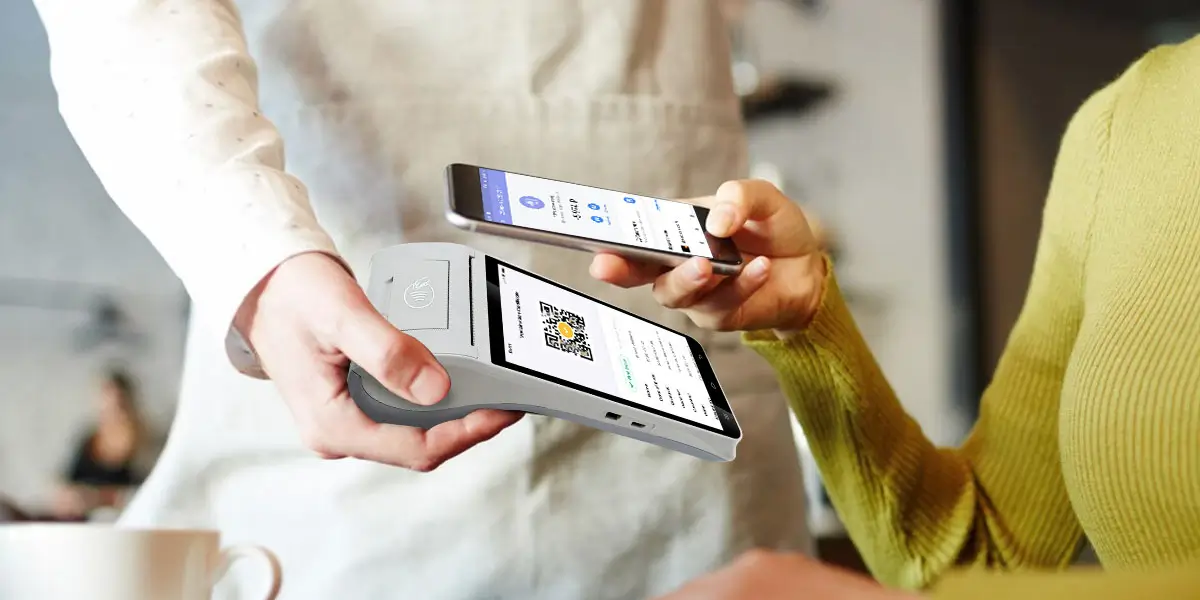
Picture the morning rush. A customer pulls up to pump four, walks in to prepay $40 cash, and heads back out. Meanwhile, another customer at pump two has been standing at the nozzle for forty-five seconds waiting for authorization to come through. The cashier is watching both situations at once, dealing with a question from someone at the counter, and tracking which pumps are active from a display that lags two to three seconds behind reality. Pump four gets authorized — but the cashier isn't certain it was the right amount, because the terminal doesn't show pump-level status in real time. She calls out to ask. No one answers.
This is not a staffing problem. It is a system design problem.
When a POS and a fuel controller operate as separate systems with no direct integration, every transaction that involves both becomes a manual handoff. The cashier acts as the connection layer — converting the physical reality at the pump into inputs on a terminal that was never designed to receive them. Prepaid amounts have to be manually entered and manually matched to the right pump. When a customer under-fills (they pumped $31.44 against a $40 prepay), the cashier has to identify the change amount, issue a refund, and ensure the fuel controller has released correctly. When a customer over-pumps or the nozzle misfires, there's no automatic flag — just a discrepancy that surfaces later, if at all.
The cost of this friction is cumulative and largely invisible. Cashier errors in manual pump authorization add up across hundreds of transactions per week. Refund processing time at the counter creates lines during peak hours. Drive-offs — customers who take fuel without paying — are harder to catch and document when no automated pump-level transaction record exists. According to data from the ASU Center for Problem-Oriented Policing, many US convenience stores experience two to three fuel drive-offs per week; with fuel theft costs estimated at over $200 million annually across US stations, the stores without integrated logging absorb a disproportionate share of those losses.
An integrated gas station POS eliminates the handoff. Pump authorization is issued directly from the POS based on payment confirmation. Status — authorized, filling, complete, overage — is visible at the terminal in real time. Prepay and postpay flows are handled automatically, with change calculations and refund triggers built into the transaction logic rather than dependent on the cashier's attention.
A grocery store sells a product at a price that might change once a week. A gas station sells a commodity whose price can change multiple times in a single day — tracked by grade, adjusted by market, and potentially different for cash versus card customers depending on state law. Any POS that treats fuel like a normal retail SKU is working against the operator from the start.
Real-time fuel price management means the ability to update prices at the pump level instantly — from a central terminal, without requiring a separate update workflow across the fuel controller and the POS independently. When the rack price moves and you need to reprice, the change should propagate to the pump displays, the POS receipt logic, and your reporting in one action. A system that requires two separate updates introduces a window where the pump shows one price and the register calculates another.
Fleet card processing is a category that generic retail POS systems either handle poorly or not at all. Commercial fleets — delivery companies, contractors, municipal vehicles — often pay via proprietary fleet cards (WEX, Voyager, Comdata) that carry controls at the card level: which vehicle, which driver, which purchase types are authorized, what spending limits apply. A gas station point of sale that supports fleet card acceptance needs to communicate with the card network correctly, capture the data fields those networks require (odometer reading, driver ID, vehicle ID), and generate the billing records that fleet managers expect. A retail POS repurposed for fuel simply doesn't have this logic built in.
Drive-off documentation and prepay enforcement are the tools that convert a passive loss into a recoverable event. When a customer drives off without paying, a POS with pump-level transaction logging can immediately generate a record with pump number, time, fuel grade, volume dispensed, and if a camera integration exists, a vehicle image trigger. That record is what law enforcement needs for a report. Without it, the loss is just a number in the reconciliation — and it stays a loss. Prepay mode, meanwhile, eliminates the drive-off risk entirely for new or unrecognized customers: the pump doesn't activate until payment clears.
Postpay for trusted customers, managed through fleet accounts or loyalty tiers, allows regular commercial customers to fill first and settle on a billing cycle — a standard expectation in fleet operations that requires account management functionality well outside what a basic retail terminal handles.
Here is what the numbers actually look like: in 2024, US convenience store fuel sales accounted for 61.2% of total revenue — but only 39.3% of gross profit. In-store sales were 38.8% of revenue and 60.7% of gross profit. (Source: Convenience Store News Industry Report)Fuel gets people to the lot. The store is where the margin lives.
That split creates a genuine operational problem for anyone trying to run both sides from a single back-end. Fuel and in-store merchandise operate under completely different logic:
Fuel is priced by grade and sold by volume. It carries its own tax structure. It has no SKU in the conventional sense. Inventory is measured in gallons held in underground tanks, not units on a shelf. Reconciliation requires matching pump-read volume against delivery records and sales totals. Margin fluctuates with every rack price movement.
In-store merchandise is unit-based, barcoded, tax-categorized by product type, subject to reorder thresholds, and tracked against supplier invoices. Age-restricted items (tobacco, alcohol where applicable) require verification workflows. Promotional pricing, bundled offers, and loyalty redemptions all apply at the item level.
Running these two businesses through separate systems — a fuel controller for the forecourt and a retail POS for the c-store — produces separate data that has to be manually reconciled before you can understand your actual daily P&L. Most operators end up with a rough number at end of day, not a clean one, because the two streams never merge automatically.
A genuine gas station POS integrates both: fuel transactions and retail transactions flow into the same reporting layer, department-level margin is visible without manual export, and the shift report at the end of the day shows one coherent picture rather than two numbers that need to be added together with a calculator. Fuel tax reporting, shrinkage tracking for in-store inventory, and sales mix analysis are all accessible from the same interface — which matters when one person is running the whole operation.
The challenge with gas station loyalty is that the default customer behavior works against retention. Most drivers make fuel decisions based on one factor — the price they can see from the road. If the station across the street is two cents cheaper, that's where they go. Price-only competition at the forecourt is a margin compression spiral, and it's one that operators running thin fuel margins cannot win long-term.
The stations that break out of that pattern do it by making the loyalty benefit visible at the moment the pricing decision is made. A per-litre or per-gallon discount tied to membership — shown on the pump display when a loyalty card or plate number is recognized — converts the price comparison from "your price vs. their price" to "your price vs. their price minus my discount." That shift changes the math for a regular customer in your favor, even when your posted price is marginally higher.
Fuel-specific loyalty mechanics that a generic retail loyalty program doesn't support include:
Volume-based accumulation. Points earned per gallon rather than per dollar of spend smooth out the volatility of fuel prices — a customer who fills the same 15-gallon tank earns the same reward regardless of whether gas is $3.10 or $3.90 that week.
Linked in-store incentives. The customer who just paid for fuel is already in or near your store. A loyalty program that triggers a relevant in-store offer at checkout — a discounted coffee with any fuel purchase over a certain threshold, for example — uses the forecourt transaction as the entry point for a higher-margin inside sale. Connecting those two transactions is only possible when the POS sees both in the same system.
License plate recognition (LPR) integration. For stations that have invested in LPR cameras, a POS with the right integration can identify a returning customer's vehicle before they've even picked up the nozzle — pre-authorizing their preferred grade, applying their loyalty discount automatically, and skipping the card-tap step entirely. The experience at the pump becomes noticeably faster and more personalized for regulars.
Repeat customers are significantly more valuable than one-time drivers. They spend more per visit, they're more likely to come inside, and they cost nothing to acquire after the initial loyalty enrollment. In an industry where fuel margins are structurally thin and gross profit increasingly depends on what happens inside the store, the loyalty program isn't a nice-to-have — it's the mechanism that makes the business model defensible over time.
Shopping for a gas station POS is not like shopping for a retail terminal. The category-specific requirements are significant, the hardware choices have long-term consequences, and some contracts carry lock-in terms that make switching expensive even when the system isn't working. Here is what to pressure-test before committing.
Pump controller compatibility — verify it in writing. The most critical integration in a gas station environment is between the POS software and your specific fuel controller brand and model (Gilbarco Veeder-Root, Wayne, Tokheim, etc.). The software vendor should be able to name the exact protocol version they support for your equipment. "Compatible with most controllers" is not an answer. Get the specific integration confirmed before you sign.
EMV compliance at the pump. The EMV liability shift for outdoor payment terminals has moved the fraud risk to any station that hasn't upgraded pump-side card readers to chip-capable hardware. Non-compliant stations absorb the cost of fraudulent card transactions that chip readers would have caught. If you're evaluating a new POS system, confirm that the payment software layer your vendor recommends is EMV-certified for outdoor readers, and factor any pump hardware upgrade costs into the total cost of ownership.
Fleet card network support. If commercial vehicles are part of your customer base, confirm which fleet card networks the payment software supports: WEX, Voyager, Comdata, and any relevant regional networks. This is a software and payment processor question, not a hardware question — but it's one that disqualifies many generic retail platforms outright.
Cloud-based reporting accessible off-site. An operator who can't pull yesterday's sales mix, fuel margin, and shrinkage report from a phone at 7 AM has a significant information gap. Cloud-connected POS reporting is the baseline expectation for a modern gas station operation. Verify that the reporting layer works independently of whether someone is physically at the terminal.
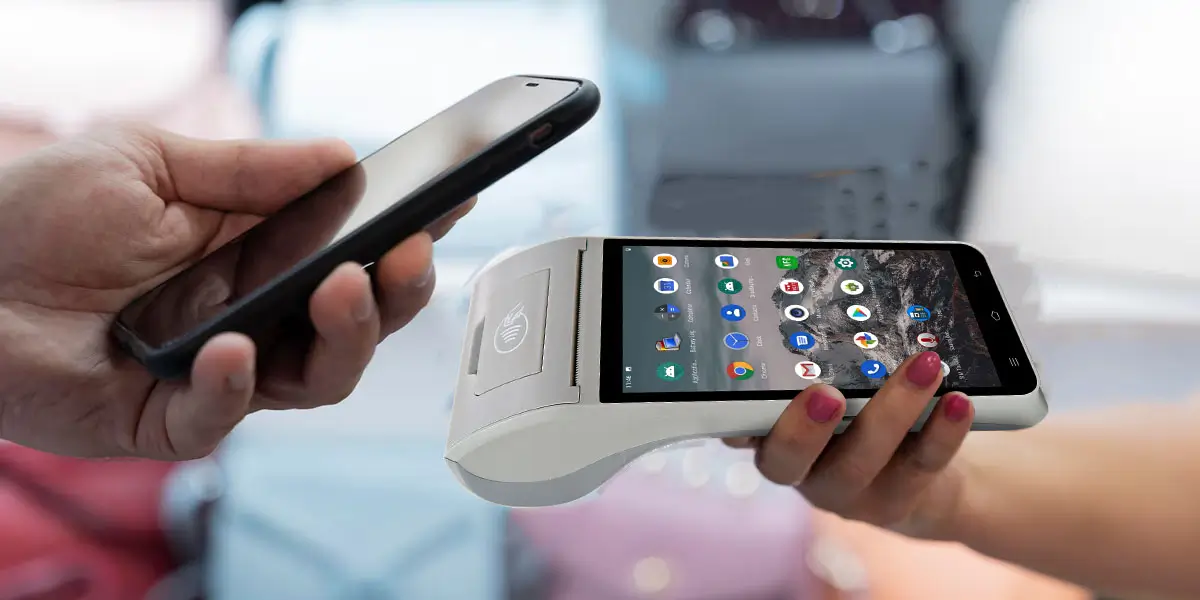
Hardware that fits the environment. Fixed counter positions in the c-store need reliable terminals with clear customer-facing displays — essential when customers are watching fuel totals and promotional pricing apply in real time. Floor staff handling inventory, age verification checks, or curbside transactions benefit from mobile capability. The ZCS Z91 is a handheld Android POS terminal built for this kind of flexibility: 5.5-inch touchscreen, 4G/Wi-Fi/Bluetooth connectivity, built-in thermal printer, NFC support, and GPS — all in a 414g device running an open Android platform that POS software vendors can integrate against using the provided SDK. Like ZCS's full terminal range, the Z91 is open hardware: payment certification and POS software are handled by the operator's chosen vendors. For a gas station operator who needs a specific fuel-certified POS software on top, that separation matters — the hardware doesn't lock you into a software stack you can't replace.
Contract terms and support SLAs. A POS failure during a busy morning is not a theoretical inconvenience — it stops fuel authorization and backs up the counter simultaneously. Before signing, understand the support escalation path for critical failures, the guaranteed response time, and whether the contract includes any lock-in provisions that make switching vendors financially punishing. A system that's difficult to leave is often that way by design.
The right gas station POS system is one that earns its place by making the operation measurably tighter: fewer reconciliation discrepancies, fewer unlogged drive-offs, faster fleet card processing, cleaner department-level margin reporting, and a loyalty program that converts one-time fill-ups into repeat customers. That's what "built for the forecourt" actually means.
Q1: What happens when a gas station POS system lacks direct pump controller integration?
A: Without integration, your cashier becomes a manual "data bridge." This manual handoff causes severe bottlenecks during peak morning rushes—forcing staff to manually input prepay amounts, calculate under-fill refunds, and clear nozzles. This friction slows down lane throughput, invites human error, and makes tracking active pumps incredibly stressful.
Q2: How can specialized gas station POS systems combat fuel theft and drive-offs?
A: Fuel theft costs US stations over $200 million annually, with unintegrated convenience stores suffering 2 to 3 drive-offs every week. A built-in gas station POS enforces strict prepay workflows for unrecognized drivers and automatically logs pump-level transaction records (including fuel grade, exact volume, and timestamps) to generate the precise evidence law enforcement needs.
Q3: Why can't a generic retail or restaurant checkout platform handle fleet cards?
A: Commercial fleet cards (like WEX, Voyager, and Comdata) don't behave like standard credit cards. They enforce strict parameters—such as tracking driver IDs, vehicle numbers, and odometer readings—while restricting purchases to specific fuel grades. Generic retail systems simply lack the specialized data-capture logic required to process and authorize these proprietary commercial networks.
Q4: How does a gas station POS bridge the massive operational split between fuel and c-store merchandise?
A: In this industry, fuel drives 61.2% of revenue but only 39.3% of gross profit, meaning the real margin lives inside the convenience store. A specialized system merges these fundamentally different worlds—unifying fuel sold by volume/tank dip with barcoded, unit-based store SKUs—into a single daily P&L report, eliminating the need for manual end-of-shift calculator math.
Q5: What is the single most critical factor to check before purchasing a gas station POS system?
A: Pump controller compatibility, and you should always get it in writing. The software layer must natively support the exact protocol version of your physical dispensers (e.g., Gilbarco Veeder-Root, Wayne, Tokheim). If a vendor offers a vague "compatible with most brands" promise without specifying your exact model, the hardware will likely create major configuration headaches.
Related Posts
1. The Future of POS: Adapting to a Cashless Society in the Next Five Years
2. In-Depth Analysis of Smart POS Integration Systems for Gas Stations & Convenience Stores
3. Smart Android POS Solutions for Bodegas and Urban Convenience Stores






 Home
Home  Best Pos Cash Registers for Small Business Owners in 2026?
