
2025-12-01 Author : ZCS
Dual-screen POS systems are becoming one of the most influential technologies reshaping modern restaurants and retail stores. As consumer expectations shift toward interactive,transparent, and personalized shopping experiences, businesses increasingly invest in advanced payment devices that improve both service efficiency and customer engagement. In this context, the point of sale systems with dual screen for customer transparency — especially Android-based systems developed by an experienced POS manufacturer — have emerged as powerful tools for enhancing customer satisfaction and driving measurable increases in sales.
This article explores the growing demand for dual-screen POS terminals, the specific customer-experience advantages they deliver, and how restaurants and retailers can leverage them to improve operational flow, accelerate checkout, and introduce new sales opportunities. We will also reference reliable third-party research and highlight how ZCS , a global POS manufacturer, supports businesses with high-performance dual-screen solutions.
The dual-screen POS trend is driven by two major forces:
the need for faster, more transparent checkout experiences, and
the rising importance of customer-facing engagement at the point of sale.
A study conducted by Salesforce found that “80% of shoppers say the experience a company provides is as important as the products”.
This means every touchpoint — especially checkout — directly influences customer loyalty and revenue.
Meanwhile, the National Restaurant Association reports that restaurants using modern POS systems experience up to 20–30% faster checkout speeds, thanks to better order management and streamlined workflows.
Dual-screen POS aligns perfectly with these expectations because it creates a more interactive, transparent, and efficient payment process.
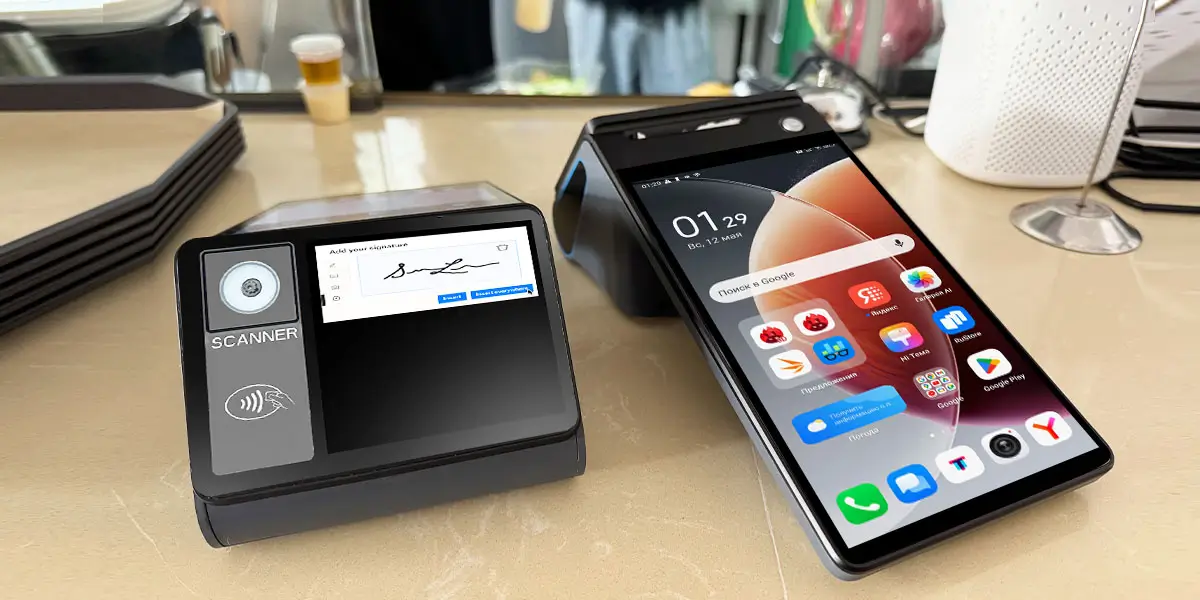
The customer-facing display is the defining advantage of dual-screen POS systems. Unlike traditional setups, point of sale systems with dual screen for customer transparency ensure customers can clearly see every item, price, modifier, promotion, and subtotal as it is added.
When evaluating hardware, modern Android-driven all-in-one desktop terminals are the premier point of sale systems with dual screen for customer transparency. Leading solutions like the ZCS Z108 exemplify this trend by pairing a high-performance primary touchscreen with a dedicated customer-facing display. By showing all transaction details in real time on the Z108 outer screen, these devices create an open checkout environment that builds immediate consumer confidence.
Consumers are increasingly concerned about billing accuracy. Customers can instantly verify their items, prices, and taxes on the Z108 secondary display, preventing disputes and reducing staff workload. For restaurants, especially QSRs (quick-service restaurants), this level of transparency significantly reduces order mistakes and ensures a smoother operational flow.
Dual-screen POS allows stores to display:product images,combo meal suggestions,loyalty rewards,promotions,QR code membership sign-ups.
This turns a simple screen into a customer-engagement tool. In small cafés and boutique stores, the keyword “compact dual screen POS for small cafe or boutique store” becomes especially relevant because space efficiency and engagement are primary concerns.
One of the most underrated benefits of dual-screen POS technology is its ability to increase sales directly through visual prompts.
A study by Nielsen found that impulse purchases account for 70% of consumer spending in some retail categories.
This is precisely where dual-screen POS excels.
With a carefully designed customer-facing screen, retailers can display:
“Suggested add-ons”
“People also buy” cross-sell items
Limited-time store promotions
Loyalty point bonuses for larger purchases
This matches the blue-ocean keyword:
“dual-screen POS for impulse upsell display”
Even restaurants benefit by promoting:side dishes,dessert upgrades,drink add-ons,meal combos.
The subtle visual influence often leads to 10–15% higher average order value.
Displaying enticing images on the customer screen, such as desserts or chef-recommended dishes, is far more effective than verbal upselling.
By pairing dual-screen POS with an Android marketing app, restaurants can automate cross-sell campaigns.
Speed is a top priority for today’s customers. According to Zendesk, 73% of customers say fast service is critical to a good experience.
Beyond engagement, point of sale systems with dual screen for customer transparency increase speed through:intuitive interfaces,customer self-verification,real-time error correction,smoother payment flows,reduced back-and-forth with staff.
For busy QSRs and bar environments, the keyword applies:
“dual-screen Android POS for quick service restaurant checkout speed.”
Faster checkout = shorter queues = higher table turnover = more daily revenue.
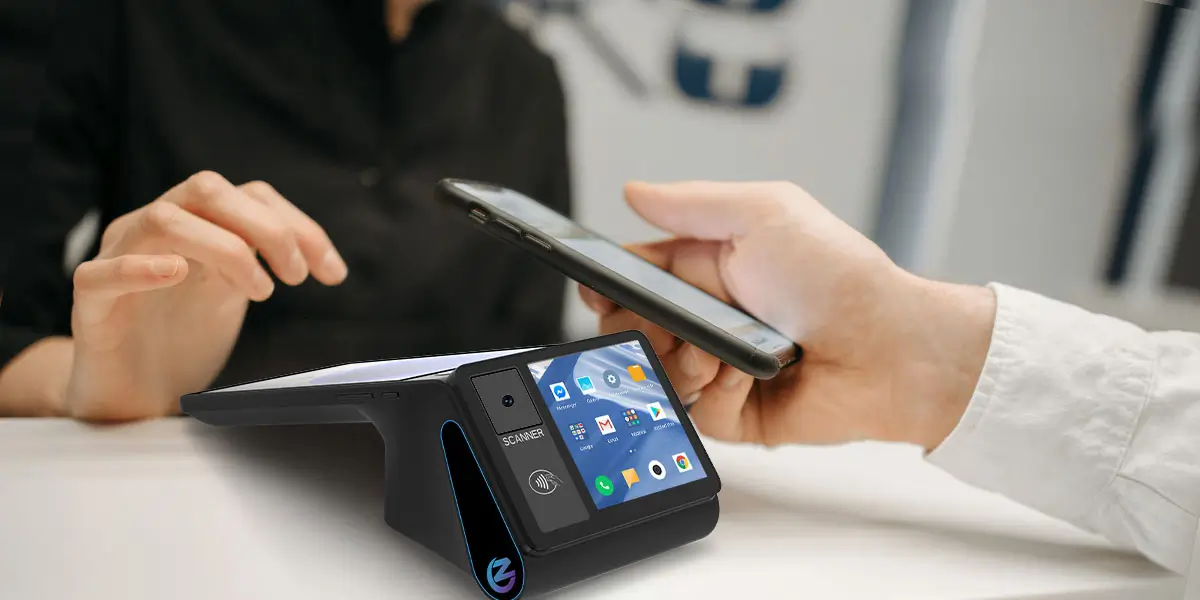
Chain retailers and multi-location businesses require centralized data, synchronized inventory, and consistent promotion strategies. Dual-screen POS works exceptionally well in these environments.
The blue-ocean keyword fits perfectly here:
“cloud-ready dual screen POS for real-time inventory sync.”Retailers can:,track stock across branches,synchronize price updates,monitor sales trends,push uniform promotions.
This strengthens brand consistency and prevents stock-outs.
With an integrated loyalty system displayed on the customer-facing screen, customers can easily:track points,receive personalized offers,scan QR codes,sign up for membership.
This aligns with:
“dual screen POS with integrated loyalty & membership display.”
Dual-screen POS is not just for permanent stores. Pop-up stores, farmers markets, exhibitions, and outdoor events rely heavily on fast, mobile payment systems.
The keyword:
“portable dual screen POS for pop-up store and outdoor events,”
positions the technology perfectly for temporary retail.
With Android-based systems, merchants can quickly set up:instant wireless payments,cloud syncing,mobile receipt printing,customer promotions on the display.
This allows new brands and small vendors to offer professional service equal to larger retailers.

Hardware reliability is critical. Restaurants and retailers need durable devices with long lifecycle support, strong processors, and secure payment features.
This is where selecting the right hardware becomes vital. Understanding what makes a great system is the first step — our Best POS Systems for Restaurants guide breaks down the key features to look for in 2026.
ZCS — Trusted Global POS Manufacturer
ZCS is recognized for:high-quality Android POS terminals,stable dual-screen POS systems,OEM & ODM customization,reliable after-sales support,strong R&D and engineering. capability
For businesses looking to adopt dual-screen POS devices that support:high transaction volume,multi-location sync,loyalty integration,advanced promotions.
ZCS provides long-term stability and competitive pricing.
Some retailers require customized branding, unique UI, or specialized hardware layouts.
Dual-screen POS devices from ZCS support:logo branding,custom housing design,software pre-configuration,multi-language integration,industry-specific optimization.
This matches the blue-ocean keyword:
“OEM-ready dual screen POS hardware for retail brand customization.”
Customization helps retailers strengthen brand identity and offer differentiated customer experiences.
Dual-screen POS systems deliver measurable improvements in:customer experience,transparency,order accuracy,checkout speed,loyalty engagement,upsell and cross-sell,conversions,brand trust.
retail chain management efficiency
As consumers continue demanding more convenience and personalization, point of sale systems with dual screen for customer transparency will shift from a "nice-to-have" feature to a must-have competitive advantage.
For restaurants and retail stores seeking reliable, modern POS solutions, choosing a trusted POS manufacturer such as ZCS ensures long-term performance, customization flexibility, and scalable growth support.
Q1. What is a dual-screen POS system?
A dual-screen POS has two displays — one for staff and one facing the customer — improving transparency, engagement, and checkout accuracy.
Q2. How does dual-screen POS help restaurants increase sales?
Customer-facing screens enable automated upsells, combo promotions, and cross-sell suggestions, boosting average order value.
Q3. Why is dual-screen POS better than single-screen POS?
Dual screens enhance transparency, reduce errors, support loyalty sign-ups, and improve the customer experience.
Q4. Can dual-screen POS integrate with loyalty programs?
Yes. Modern systems, including solutions from ZCS, support loyalty QR codes, point displays, and personalized offers.
Q5. Is dual-screen POS suitable for small cafés or retail boutiques?
Absolutely. Compact dual-screen POS devices save counter space and offer professional engagement tools for small shops.
Related Posts
1. Best POS System for Liquor Stores: The 2026 Operational Guide
2. Handheld POS Systems for Restaurants
3. All-in-One Android POS Terminal for Food Service






 Home
Home  POS + Inventory & CRM Integration: Boost Efficiency and Customer Loyalty for Small Businesses
